Title: Collaboration between Bangladeshi researchers and practitioners for JICA’s Projects/Programs in Bangladesh
Organizer:
Mohammad Abdul Malek, University of Tsukuba
Lead Speaker:
Syed Nasir Ershad, The Embassy of Bangladesh in Tokyo
Panelists:
Chowdhury Mahbubul Alam, Fukuoka Women’s University
Tofael Ahamed, University of Tsukuba
Salma Akter, Kyoto University
Shoaib Bhuiyan, Suzuka University of Medical Science
Abstract: Half a century ago, on February 10, 1972, Japan officially recognized Bangladesh as a sovereign nation-state. Since then, the two countries have maintained a warm relationship, which can be dubbed as a “good model” of development partnership and Japan became Bangladesh’s single largest bilateral donor through Japan-Bangladesh Economic cooperation. With this huge bilateral economic cooperation, how JICA projects and programs contributed in Bangladesh’s development from ‘basket case’ to achieving ‘middle-income country’? Are the collaborations between researchers and practitioners across the sectors (public, private, and NGOs) necessary and feasible to avoid a possible ‘middle-income trap’ in the future development journey for Bangladesh? How Bangladeshi researchers and practitioners can better contribute across the domains to create ‘evidence base’ for qualitative improvements of future JICA Projects and Programs for Bangladesh? After having a background presentation on JICA projects and program operation in Bangladesh by the representative from the Embassy of Bangladesh in Japan, four academics from respective domains (1. Business, huminites, and social science, 2. Agricultural Science, 3. Medical, pharmaceutical, and public health, 4. Natural Science, engineering, and ICT) will shed their reflections. A few questions/comments will also be appreciated from the audience.
Keywords:
Japan- Bangladesh Economic Cooperation, JICA Projects and Programs, Collaboration for interdisciplinary evidence-based policy making, Middle-Income trap.
Biography:

Dr. Malek is an Associate Professor (Development Economics and South/Southeast Asian Studies) at the Institute of Humanities and Social Sciences at the University of Tsukuba. By training and practice, Dr. Malek is an agricultural, behavioral, and development economist specializing in interdisciplinary evidence-based policy-making research, mostly following randomized control trials (RCTs). Currently he is leading Mahabub Hossain Panel Data (MHPD) project funded by Asian Development Bank (ADB), the oldest household panel survey in Bangladesh, which has already been used in more than 70 academic studies. Dr. Malek adopts state-of-the-art program evaluation techniques from micro econometrics, including quasi-experimental and non-experimental methods and machine learning solutions for empirical policy analyses. These days, he mostly follows neo-normal project management to implement field experiments and digital survey solutions to conduct household surveys in developing countries. His research projects got funding from ADB, ADBI, JSPS, 3ie, IGC, Gates Foundation, DFAT, etc. In recent years, he published articles in well-known journals, namely, Asian Development Review (2023-Forthcoming), American Journal of Agricultural Economics (2022, 2018), World Bank Economic Review (2021), Journal of Development Economics (2020), Journal of Productivity Analyses (2019), Technology in Society (2017), Asian Journal of Innovation and Policy (2017), the Journal of Bangladesh Studies (2014), etc. among others. Due to professional reasons, Dr. Malek is linked with several professional societies and has been nominated as one of the Executive Committee Members for the Asian Society for Agricultural Economists (ASAE) since 2017. Currently, he is also serving as the Coordinator for the Network of Bangladeshi Researchers in Japan (NBRJ) and supporting several start-ups/NPOs in Bangladesh.
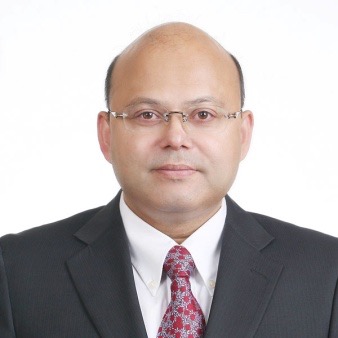
Syed Nasir Ershad has been a career civil servant in the Government of Bangladesh for the last 28 years. Currently, he is working as the Economic Minister at the Embassy of Bangladesh in Japan. Prior to this posting, he served in various positions of the Government, including the Cabinet Division, Ministry of Finance, Ministry of Public Administration, Local Government Division, etc. He was also assigned as the Counsellor at Bangladesh Embassy in South Korea. One of the major areas of his current job is to further strengthen and enhance the economic cooperation between Bangladesh and Japan. This requires intense negotiation with the Japanese authorities, including the Ministry of Foreign Affairs, Finance, METI, JICA, JICE, etc. On the other hand, he also has to keep regular contact with the relevant ministries, departments, and other stakeholders in Bangladesh. He obtained Master’s in Economics from the University of Dhaka and Master’s in Public Policy from GRIPS, Tokyo. He was also trained under the Hubert Humphrey Fellowship program at the University of Washington, Seattle, USA. He is married and blessed with two daughters.

Dr. Mahbubul Alam Chowdhury, Professor of International Business Management, in the Department of International Liberal Arts and Graduate School of Humanities and Social Sciences at Fukuoka Women’s University. He received his Bachelor’s and Master of Arts degrees in History from Chittagong University in Bangladesh. Master of Commerce and Ph.D. in Commerce from Aichi Gakuin University, Japan. Dr. Chowdhury has wide experience in teaching and research. He has published numerous books and research papers in different professional journals. His research interests include Asian business and economics, (especially manufacturing industries, automobile industry, and textile industry), multinational corporations, foreign direct investment, and globalization issues. For many years, he has been teaching Japanese business, management, and industrialization of Asian countries at undergraduate and graduate levels to Japanese and foreign students at universities in both English and Japanese. In addition, he has inception in a series of three and five hours lectures which he occasionally gave to civil servants from developing and transition countries at Japan International Cooperation Agency, (JICA, Kitakyushu).
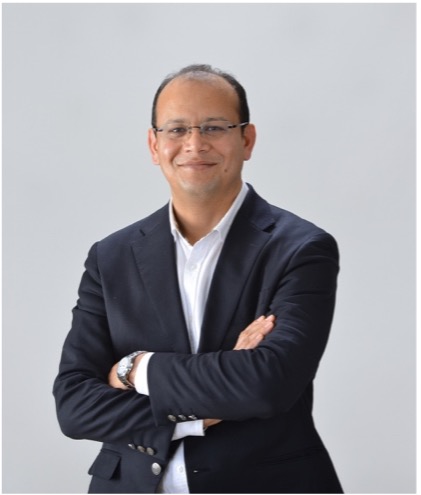
Dr. Tofael Ahamed is an Associate Professor at the Faculty of Life and Environmental Sciences, University of Tsukuba. Dr. Ahamed has teaching and research experiences as a Lecturer, Assistant, and Associate Professor in the Department of Farm Power and Machinery, at Bangladesh Agricultural University. He received Ph.D. from the University of Tsukuba and conducted postdoctoral research at the University of Illinois at Urbana-Champaign, USA. Dr. Ahamed performs research in precision agriculture technology, agricultural robotics, and decision support systems. He focuses on enabling smart applications using the Internet of Things (IoT) and Artificial Intelligence (AI) in agriculture, where crop and orchard production varies spatially and temporally within the field boundaries depending on the soil, nutrient, and environmental conditions. Dr. Ahamed is also receiving research support from the Japanese Society of Promotion Science, Ministry of Agriculture, Fisheries and Forestry, Japan, and Industries as a principal researcher and co-researcher. He is a member of the American Society of Agricultural and Biological Engineers (ASABE), the Japanese Society of Agricultural Machinery and Food Engineers (JSAM), the Japanese Society of Agricultural Information (JSAI), and the Japan Section of Regional Science Association (JSRSAI). Dr. Ahamed is also serving as one of the Associate Editors for Computer and Electronics in Agriculture (Elsevier), Agricultural Information Research (JSAI), Editorial Member for Asia-Pacific Journal of Regional Science (Springer-nature), and Author and Editor of several books.

Dr. Salma is working as a postdoctoral fellow in the Department of Radiation Genetics at Kyoto University. She finished her bachelor’s and master’s in the Department of Biochemistry and Molecular Biology at the University of Dhaka. Currently, Dr. Salma is working in the DNA damage and Repair field to uncover the unknown functional link between DNA double-strand break repair and hormone-induced transcriptional response. Previously she showed hormone-induced genotoxicity in the human breast cancer cell line and human B lymphoblast cell line.
Dr. Md Shoaib Bhuiyan joined the Faculty of Engineering at the Nagoya Institute of Technology, Nagoya, Japan in April 1996, soon after earning a doctorate degree from its Electrical & Computer Engineering. He is now a tenured Professor (kyouju) at the Suzuka University of Medical Science, in its Health Data Science department, and also with the Graduate School of Health Science.
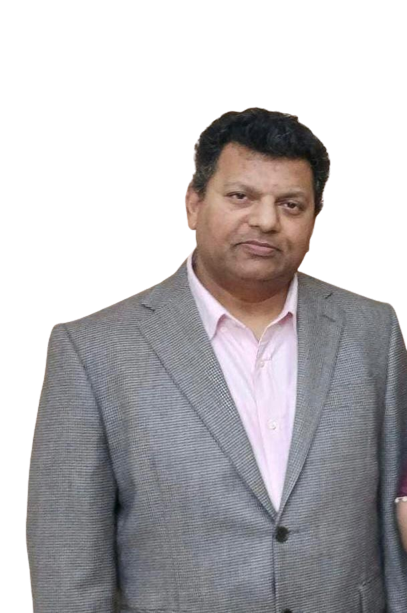
Professor Bhuiyan teaches or has taught courses on programming, database, image processing, human interface, artificial Intelligence, and deep learning. His research involves application of image processing and machine learning technologies in the Intelligent Transportation System (using image data obtained from multiple sensors inside and outside the vehicle) and in biomedical setting. He has a Japanese Patent # 2012-068841, on awakening device for intelligent vehicles. He is a Senior member of the IEEE (Institute of Electrical and Electronics Engineers). He served as an editorial board member of IEEE PULSE, a flagship publication of the IEEE Engineering and Medicine in Biology Society, for 4 years till 2018. He is an active member of several related academic societies. Professor Bhuiyan is a member of the Technical Committee and the program committee of several international Conferences on related academic fields. He has reviewed articles for many international journals and conferences and has chaired or co-chaired sessions at several flagship IEEE conferences. He has authored or co-authored 80 peer-reviewed technical articles. He also holds an N2 level certification of the JLPT (Japanese Language Proficiency Test)
 Network of Bangladeshi Researchers in Japan