Title:
From data to knowledge; how machine learning technologies may help in your discipline
Time: 14:00 — 16:00
Organizer:
Md Shoaib Bhuiyan, Suzuka University of Medical Science
Speakers:
Md Shoaib Bhuiyan, Suzuka University of Medical Science
Ashir Ahmed, Kyushu University and SocialTech Japan
Mahfuzul Islam, Kyoto University
Mohammad Abdul Malek, University of Tsukuba
Abstract:
Recent years have seen a shift from computer programming (by human experts) to algorithms learning from accumulated data (toward improving end results). Learning from data is not new; for example, cures for many diseases were found by collecting information from patients and analyzing them in medicine. As we now have much more data and many more application domains, we want to automate this process of going from data to knowledge. How this is done is the topic of this tutorial. We expect everyone, from novices to domain experts, to find something of value in the contributions that follow. Sketch of this two-hour tutorial talk is expected to go along these lines:
- Machine Learning Basics (Dr. Md Shoaib Bhuiyan)
- What is Machine Learning, and How Does It Work?
- Supervised and Unsupervised Learning
- Classification workflow
- Import and preprocess Data
- Classification Models
- Machine Learning in Digital Healthcare: Transforming Data for Better Patient Outcomes (Dr. Ashir Ahmed)
This lecture explores three key areas where machine learning is revolutionizing digital healthcare. Firstly, we discuss how advanced OCR systems digitize analog medical records, making data collection more efficient and accessible. Secondly, we highlight the significance of data integration, where machine learning helps consolidate information from various sources, leading to comprehensive personal health records (PHR). Lastly, we emphasize the power of data visualization, particularly doctor-friendly health Gantt charts, enabling medical professionals to make informed decisions swiftly. These advancements in data collection, integration, and visualization hold the potential to significantly improve patient care and medical decision-making in the digital healthcare landscape. - Sensor and System Design for Machine Learning Applications (Dr. Mahfuzul Islam)
Machine learning models for Activities of Daily Living (ADL) / fall detection require large, hardware-independent, and comprehensive ADL datasets exhibiting statistical variance and closeness to real-life cases. In this talk, I present the design and implementation of wearable sensors to acquire datasets suitable for use in wrist-mounted healthcare monitoring systems. I then provide quantitative performance metrics to show the validity of the dataset for application in hardware-independent healthcare monitoring systems. - Evidence-based Social Science Research- an application of heterogeneous analyses using agricultural microcredit field experiment (Dr. Abdul Malek)
This lecture has two parts. In the first part, I will give an overview of the applications of various data and methods, including ML, for evidence-based social science research. In the second part, I will describe data generation to policy analyses using ML techniques from an agricultural microcredit field experiment (RCTs-Randomized control Trials) in Bangladesh. I will particularly focus on how ML techniques could be more powerful when the sub-group (heterogeneous) treatment effect is often a point of interest to policymakers and other stakeholders alongside the simple average treatment effect. - Respond to the Query below (Dr. Md Shoaib Bhuiyan)
‘I am in such a state in my career now that there is strong pressure on me to use machine learning to analyze our data, but I don’t know where to start or how to self-study.’ - Conclusions (All speakers)
Biography:
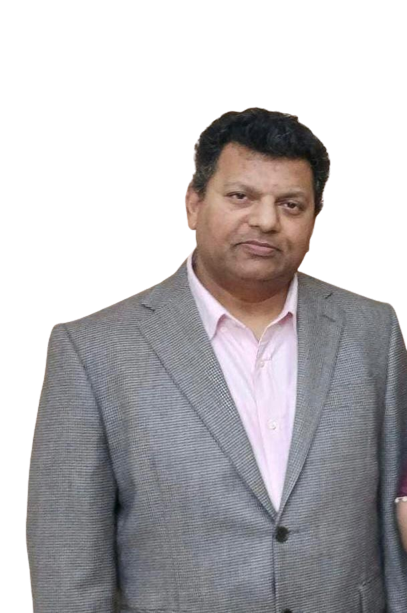
Dr. Md Shoaib Bhuiyan joined the Faculty of Engineering at the Nagoya Institute of Technology, Nagoya, Japan in April 1996, soon after earning a doctorate degree from its Electrical & Computer Engineering. He is now a tenured Professor (kyouju) at the Suzuka University of Medical Science, in its Health Data Science department, and also with the Graduate School of Health Science. Professor Bhuiyan teaches or has taught courses on programming, database, image processing, human interface, Artificial Intelligence, and deep learning. His research involves application of image processing and machine learning technologies in the Intelligent Transportation System (using image data obtained from multiple sensors inside and outside the vehicle) and in biomedical setting. He has a Japanese Patent # 2012-068841, on awakening device for intelligent vehicles. He is a Senior member of the IEEE (Institute of Electrical and Electronics Engineers). He served as an editorial board member of IEEE PULSE, a flagship publication of the IEEE Engineering and Medicine in Biology Society, for 4 years till 2018. He is an active member of several related academic societies. Professor Bhuiyan is a member of the Technical Committee and the program committee of several international Conferences on related academic fields. He has reviewed articles for many international journals and conferences and has chaired or co-chaired sessions at several flagship IEEE conferences. He has authored or co-authored 80 peer-reviewed technical articles. He also holds an N2 level certification of the JLPT (Japanese Language Proficiency Test)
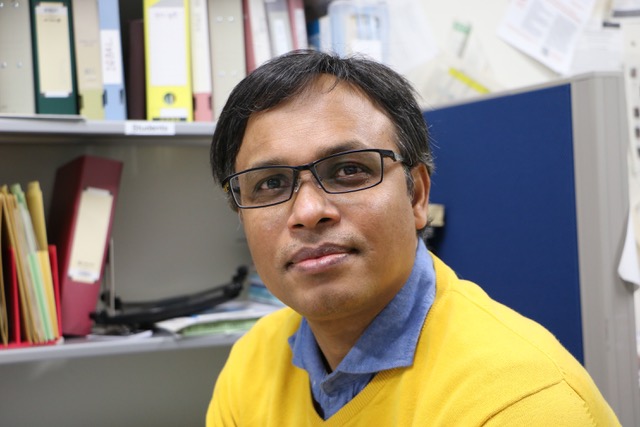
Dr. Ahmed, a visionary innovator, is dedicated to utilizing technology to achieve social goals. He established the Global Communication Center (GCC) within Grameen, fostering a team of researchers at Kyushu University. Their impactful projects, including GramHealth, GramCar, GramAgri, and GramClean, have made a significant difference. Dr. Ahmed actively facilitates collaborations between Japanese organizations and social businesses, promoting positive change. Since 2017, he has organized the renowned International Conference and SocialTech Summit, focusing on Digital Health. With a Ph.D. from Tohoku University and experience at Avaya Labs and NTT Communications in Japan, he combines his expertise with a passion for cooking, writing non-fiction, and hosting cultural shows. Dr. Ahmed is a versatile leader driving meaningful technological advancements for societal well-being.
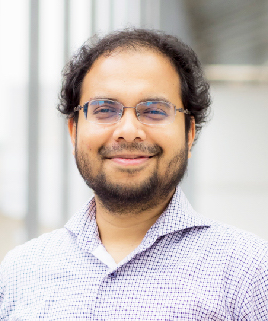
Dr. Mahfuzul Islam received a B.E. degree in electrical and electronic engineering in 2009, an M.E. degree in communications and computer engineering in 2011, and a Ph.D. degree in Informatics in 2014, all from Kyoto University, Kyoto, Japan. From 2013 to 2015, he was a Research Fellow of the Japan Society for the Promotion of Science. He joined the Institute of Industrial Science, University of Tokyo, Tokyo, Japan, as a Research Associate in 2015. Since 2018, he has been a Junior Associate Professor at the Department of Electrical Engineering at Kyoto University. His research interests include low-power CMOS analog and mixed-signal circuit design, on-chip voltage regulators, and power device reliability monitoring. Dr. Islam received the Best Paper Awards at ICMTS’2017 and ICMTS’2023, the best design award at ASP-DAC’2023, and the Student Design Award at A-SSCC’2013. Dr. Islam received several prestigious awards, such as IPSJ Computer Science Award for Young Researchers and IEEE CEDA All Japan Joint Chapter Academic Research Award. He is a member of IEEE, IEICE, and IPSJ.

Dr. Malek is an Associate Professor (Development Economics and South/Southeast Asian Studies) at the Institute of Humanities and Social Sciences at the University of Tsukuba. By training and practice, Dr. Malek is an agricultural, behavioral, and development economist specializing in interdisciplinary evidence-based policy-making research, mostly following randomized control trials (RCTs). Currently he is leading Mahabub Hossain Panel Data (MHPD) project funded by Asian Development Bank (ADB), the oldest household panel survey in Bangladesh, which has already been used in more than 70 academic studies. Dr. Malek adopts state-of-the-art program evaluation techniques from micro econometrics, including quasi-experimental and non-experimental methods and machine learning solutions for empirical policy analyses. These days, he mostly follows neo-normal project management to implement field experiments and digital survey solutions to conduct household surveys in developing countries. His research projects got funding from ADB, ADBI, JSPS, 3ie, IGC, Gates Foundation, DFAT, etc. In recent years, he published articles in well-known journals, namely, Asian Development Review (2023-Forthcoming), American Journal of Agricultural Economics (2022, 2018), World Bank Economic Review (2021), Journal of Development Economics (2020), Journal of Productivity Analyses (2019), Technology in Society (2017), Asian Journal of Innovation and Policy (2017), the Journal of Bangladesh Studies (2014), etc. among others. Due to professional reasons, Dr. Malek is linked with several professional societies and has been nominated as one of the Executive Committee Members for the Asian Society for Agricultural Economists (ASAE) since 2017. Currently, he is also serving as the Coordinator for the Network of Bangladeshi Researchers in Japan (NBRJ) and supporting several start-ups/NPOs in Bangladesh.
 Network of Bangladeshi Researchers in Japan